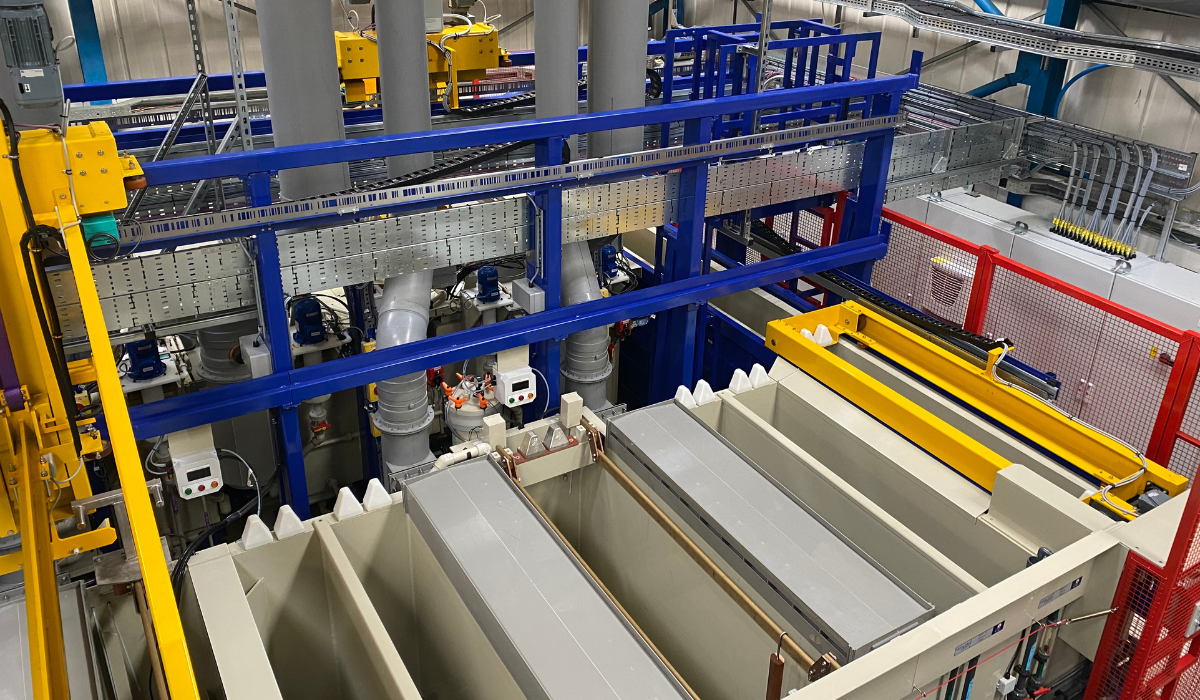
Automatic
process plant
Many of our customers are now moving towards automation which offers numerous advantages across various industries and processes
Key benefits include:
- Increased Efficiency and Productivity: Automated systems can operate continuously without breaks, leading to higher output and more efficient use of time and resources.
- Cost Savings: Automation can reduce labour costs by performing repetitive and labour-intensive tasks. It also minimizes errors, reducing costs associated with rework and waste.
- Improved Quality and Consistency: Automated processes ensure that tasks are performed with a high level of precision and consistency, leading to better product quality and uniformity.
- Enhanced Safety: Automation can handle dangerous or hazardous tasks, reducing the risk of injuries and accidents for human workers.
- Scalability: Automated systems can be easily scaled up or down to meet changing production demands without significant changes to the process or workforce.
- Data Collection and Analysis: Automation systems can collect vast amounts of data in real-time, providing valuable insights and enabling better decision-making through analytics.
- Reliability: Machines and automated systems are less prone to fatigue and human error, leading to more reliable and predictable operations.
- Flexibility: Advanced automation systems can be reprogrammed and adapted to handle different tasks, making them versatile in various applications.
- Improved Customer Experience: Faster production and service delivery, along with higher quality and reliability, can enhance customer satisfaction.
- Environmental Benefits: Automation can optimize resource use and energy consumption, leading to more sustainable operations and reduced environmental impact.
By leveraging these advantages, businesses and organizations can improve their overall performance, competitiveness, and sustainability.
Machines can be automated with HMI (Human Machine Interface) through to full Supervisory Control and Data Acquisition (SCADA) which is a combination of hardware and software used for industrial automation.
SCADA allows users to:
- Supervise and control industrial processes both locally and remotely
- Acquire, process, and record data
SCADA systems work by connecting the local sensors, devices, and PLCs – which collect datasets, known as Tags – to an onsite server or remote/virtual machine. Data can be saved to a historical database so that it can be analysed later. Users interact with the SCADA system locally to control processes through operator workstations.